


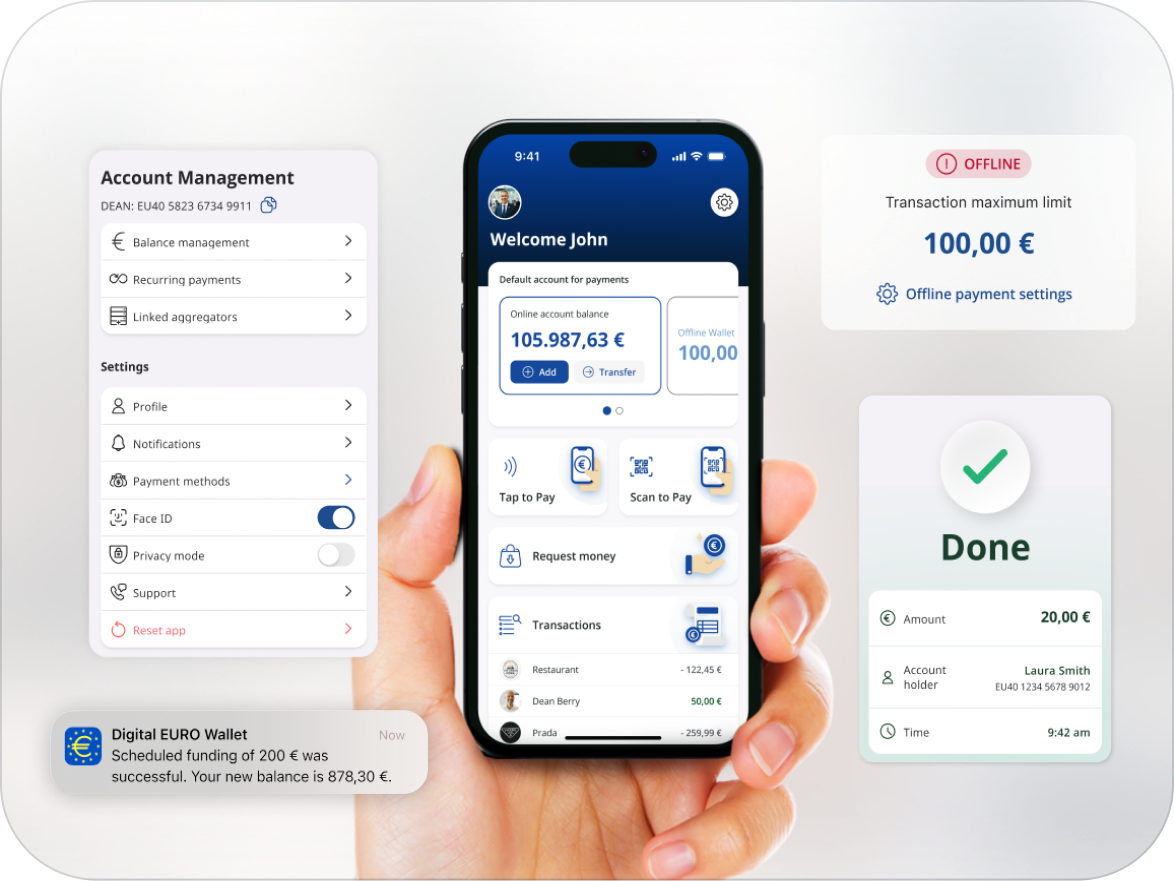
Why Prototyping in Banking Needs to Be Approached Differently Today
Banking and payment apps are key digital touchpoints—and thus crucial for usage, customer loyalty, and new revenue streams. However, the implementation of good ideas sometimes fails due to overburdened IT resources or complex approval processes. Successful prototyping creates a safe space for innovation. The team of experts at bluesource develops self-contained, clickable, or functional prototypes for the early testing of new customer journeys, payment logic, and value-added services offered by banks.
Our Prototyping Services
We view prototyping as a structured part of product development. Depending on the goal, we create a clickable high-fidelity prototype, a functional proof of concept, or an MVP with simulated interfaces and realistic workflows.


Strategy, Architecture, and Design


High-Fidelity UI/UX and Interaction Design


Functional Development and Sandbox Integration


Testing, Validation, and Roadmapping
Experience in banking, payments, and prototyping
Our projects best illustrate how an idea can be turned into a robust financial product. The following case studies provide insight into prototypes we’ve used to quickly make new banking, payment, and loyalty services visible, testable, and ready for decision-making.
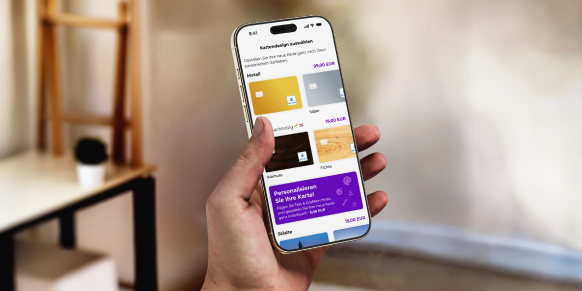
Map Configurator
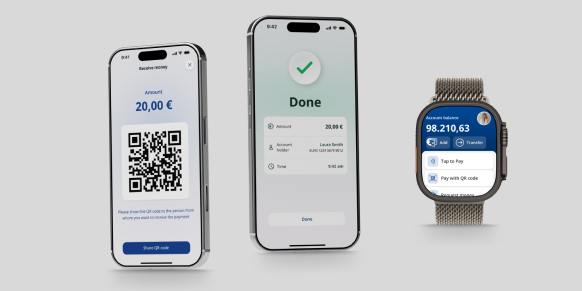
Digital Euro
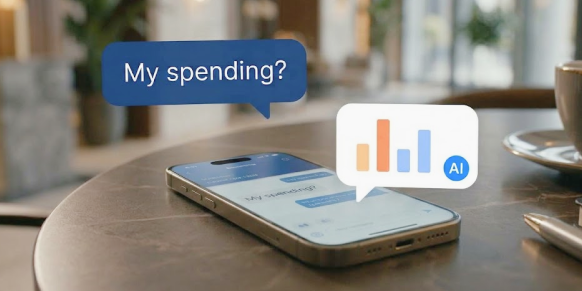
AI Assistant for Banking Apps
Compliance Considered from the Very Beginning
A compelling financial prototype must not defer regulatory issues until a later stage of implementation. We take relevant guidelines into account right from the start when designing user journeys, interaction logic, and architectural decisions. This creates a solid foundation for future reviews, audits, and approvals.

Accessibility from the very first flow

Regulatory Foresight

Data-Efficient and Secure Design
Engineering Instead of Blind Trust in AI
Generative AI makes it easy to create an appealing demo in a short amount of time. However, in banking, “vibecoding” alone often only delivers a good impression under ideal conditions—upon closer inspection, it lacks a robust architecture, clean interface logic, or transparent quality control. bluesource uses modern tools and AI support where they drive efficiency. Responsibility for architecture, engineering, review, and validation remains with our experienced specialists.


Clear Architecture Instead of Chance
Technology, data flows, and interfaces follow a clear and logical concept—tailored to the objective, lifespan, and potential transition to implementation.


Assess Quality and Compliance Early
Accessibility, data protection, security, and technical risks are not only brought to light after the demo.


Useful code with a defined purpose
A decision is made in advance as to whether the prototype will be used solely for validation or further developed as a technical foundation. This helps avoid unrealistic expectations regarding a "disposable product."


Development in Hagenberg
Design, engineering, and technical oversight are handled by our in-house team in Austria—with no near-shoring or offshoring.
A dead end for the prototype? We're getting the idea back on track
A quickly generated prototype can be convincing in a pitch but still be technically unfeasible—perhaps because APIs can’t be integrated properly, the application becomes unstable under realistic loads, or key compliance requirements are missing. But that doesn’t have to spell the end of the product idea. We review the architecture, code, and user journey, identify the usable components, and use them to develop a robust new version with a clear roadmap.
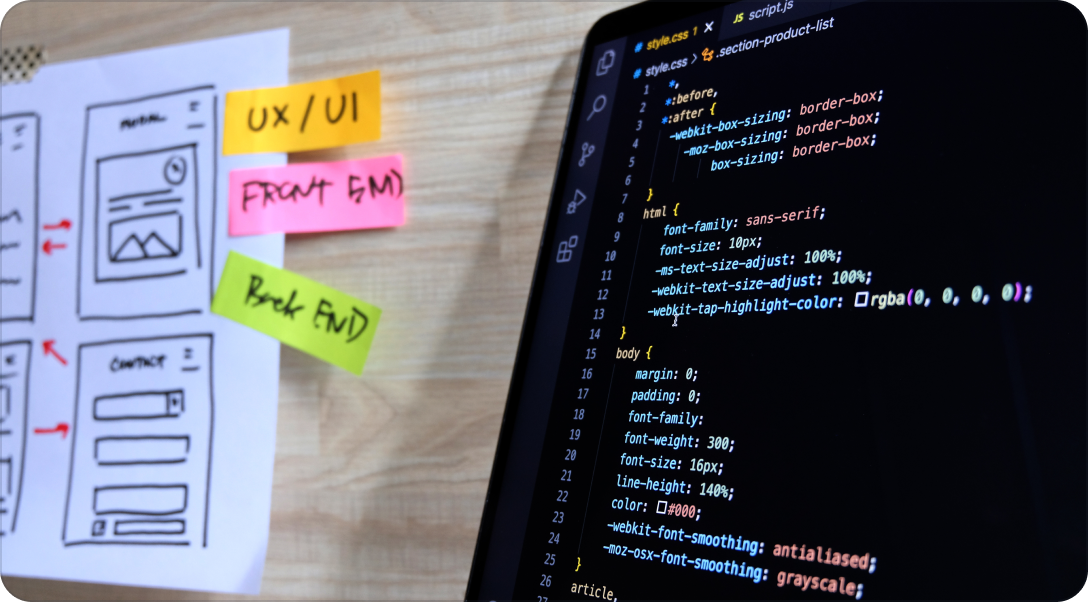
- Technical and Subject- Matter Assessment
- Decision Between Restructuring, Partial Reconstruction, and a Fresh Start
- Target Architecture and Next Steps for Implementation
Tech stack for fast and interoperable prototypes
A prototype must be developed quickly, but it shouldn't be technically arbitrary. We select technologies based on which hypotheses need to be tested, how realistically processes need to be modeled, and whether components will be reused later.

Mobile Technologies

Backend and API Simulations

Payment, Data, AI, and Loyalty
How bluesource Works: An Example of a 7-Week Sprint
The scope and duration are defined during the scoping phase. For a clearly defined use case, the following process can serve as a guide.


Scoping – Week 1
We define the core benefits, target audience, success criteria, and technical and regulatory guidelines in a focused workshop.


Design Sprint – Weeks 2 through 3
We map out user journeys and develop an interactive, high-fidelity design.


Code Sprint – Weeks 4 through 6
Next comes the development of a functional prototype or MVP. Simulated third-party systems and payment flows are integrated.


Validation and Handover
We provide prototypes for user testing and stakeholder pitches, document our findings, and deliver the technical roadmap.
How Banks Benefit from This
The greatest benefit of a prototype lies in better decision-making, not in a polished demo. Banks can evaluate utility, user experience, technical feasibility, and integration assumptions early on—with significantly less risk than in a full-scale implementation project.
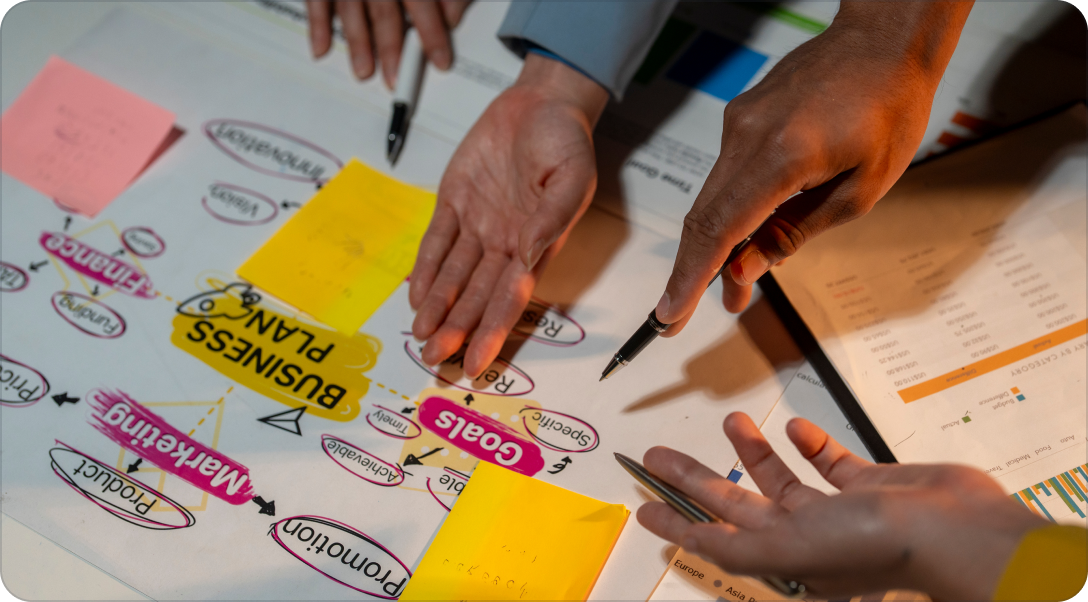
- Shorter paths from the initial idea to a sound product decision
- Early validation outside the production Core IT environment
- Better coordination among all stakeholders
- Greater investment security through a technically sound implementation roadmap
Which prototyping scenario is right for your project?
The start of a prototyping project is tailored to each individual case. We tailor the approach, team, and technical scope to your specific situation.


Brainstorming


MVP Sprint


UX and Compliance Check


Prototype Recovery


Discuss the prototyping project
FAQs
A clickable prototype realistically depicts the user journey and interactions of a banking app, usually without actual business logic.
A proof of concept (PoC) verifies whether a specific technical solution or integration is fundamentally feasible, such as connecting to a core banking system.
A Minimum Viable Product (MVP) is a functional initial version of a product that includes the most important features and can be tested and validated with real users or stakeholders.
In many cases, no. Using mock APIs, sandboxes, and simulated data, relevant processes can be modeled in a realistic manner without involving core production systems at an early stage. Whether full integration is appropriate will be determined during the scoping phase.
That depends on the goal, scope of functionality, and technical complexity. A clearly defined banking or payment use case can often be developed and validated in a focused sprint lasting just a few weeks. As a guide, this page outlines a possible 7-week timeline.
Relevant requirements are already taken into account when designing user journeys, the UI, data flows, and making architectural decisions. Depending on the project, these may include, for example, accessibility requirements under the EAA, BaFG, or BFSG, as well as data protection and security requirements. This does not preclude a case-by-case legal review.
Yes—bluesource can also take on and further develop existing banking app prototypes, even if they are unstable or technically difficult to integrate. We analyze the architecture, code, integrability, and user journey. We then provide transparent recommendations on which parts should be reused, refined, or rebuilt to ensure a stable, secure, and scalable banking app.
This is deliberately defined at the outset. Depending on the goal, the prototype can serve purely as a validation artifact or be designed so that its architecture, code, or components can be incorporated into the subsequent implementation.